Lhasa Apso: pet profile
Key Takeaways
- Lhasa Apsos descend from ancient Tibetan monastery watchdogs and can live well into their twenties.
- They're loyal, playful, and independent, though early training helps curb their stubborn streak.
- Watch for bone issues, disc problems, and eye conditions like cataracts as they age.

Medically reviewed by Dr. Kate Elden, DVM
Short Answer
Descended from a line of vigilant Tibetian watchdogs, Lhasa Apsos are playful and adaptive dogs with beautiful flowing hair, a long lifespan, and a stubborn streak. They can be obedient but should be socialized and trained from an early age.
With an exotic look, an elegant posture, and a complex nature, Lhasa Apsos are an adorable option for potential pet parents. Descended from the mountains of the Himalayas, where they served as sentinels, they are known for their floor-length coats, dark oval-shaped eyes, flat faces, and highly inquisitive nature.
Healthy and robust dogs, they’re also known for having some of the longest life spans of any breed, making them a constant companion for the better part of a decade and a half. Nonetheless, if not socialized and trained from an early age, they tend to be stubborn and disobedient. With the right training and upbringing, however, they can make for fantastic and friendly dogs, good with children and highly playful. This guide will tell you all that you should know about the Lhasa Apsos, including its history, physical characteristics, common behaviors, the usual health risks, and the best way to keep it healthy and happy. This article will cover:
Talk to a vet at Dutch about your Lhasa Apsos today.
- 24/7 care from top-rated vets
- Unlimited vet calls & messaging
History and origin of Lhasa Apsos
The name Lhasa comes from the capital city of Tibet, located in southwest China and one of the highest cities in the world. It’s home to many famous Buddhist sites, such as the Potala Palace and the Jokhang Temple. The ancient dog breed has a royal bearing that comes from its thousand-year purpose at remote monasteries and palaces high up in the mountains, working as watchdogs warning of intruders from as early as 800 AD. They developed from the Tibetan terrier and other herding dogs.
Evidence suggests that the Chinese dog breed first arrived in the United Kingdom in the early 20th century when they were brought from Tibet by military personnel. At the time, they were imported alongside the Tibetan terrier. Since the dogs were considered to be the same breed, they were first known as Lhasa terriers. Once the breed was established, it was registered as a Lhasa Apso at Crufts in 1965.
As for the United States, the first dogs were provided by none other than the Dalai Lama when he arrived in the country in 1933. The American Kennel Club registered the breed in 1935 in the Terrier group, before transferring it to the Non-Sporting Group in 1959. They are now a very popular breed and have counted famous owners such as Liberace, Kurt Vonnegut, Jane Lynch, Gwen Stefani, and Elizabeth Taylor.

Physical attributes of Lhasa Apsos
A Lhasa Apso lifespan is well-known for being very long. While the average Lhasa Apso dog lives between 12-15 years old, many live into their 20s. The oldest Lhasa Apso managed to live to the very merry age of 29.
Stretching out longer than its height, a Lhasa Apso stands between 10 to 11 inches while weighing between 13 to 15 pounds. If allowed to grow out properly, its hair curls over its back while also covering the eyes, and its hair can also reach the floor. This gives them their beautiful and royal appearance.
While a light golden-brown color is preferred by breeders, Lhasa Apsos can come in all different hues. The types of colors you could expect include:
- Black
- White
- Honey
- Sandy
- Brown
- Dark Grizzle
The Lhasa apso can also be mixed with other dogs. The types of Lhasa Apso mix out there are the Lhatese (mixed with Maltese), a Shih Apso (mixed with a Shih Tzu), and the Lhasapoo (mixed with the poodle).
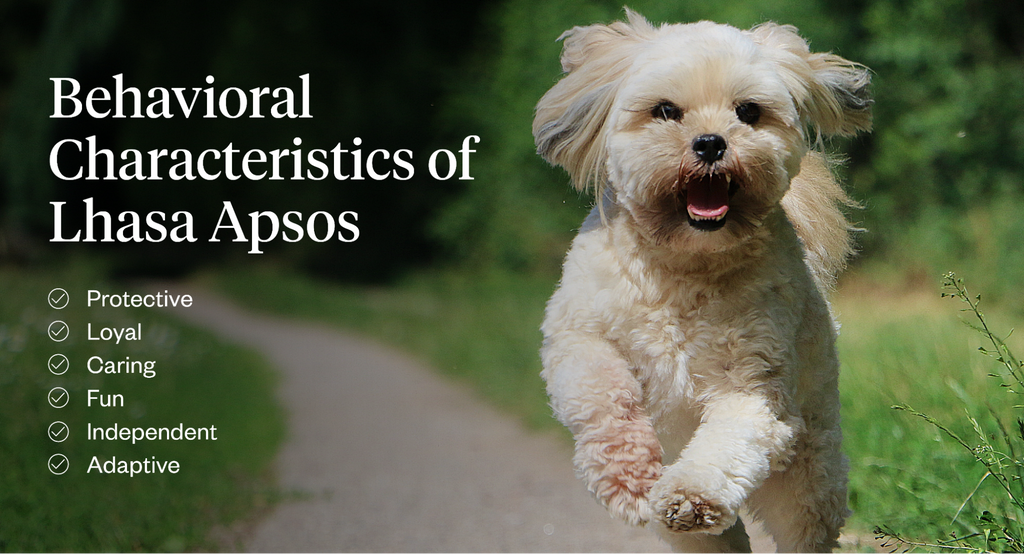
Behavioral characteristics of Lhasa Apsos
While every dog is unique, some assumptions about the ideal Lhasa Apso can be made. They tend to have the following characteristics:
- They are wary protectors, likely to bark at intruders and suspicious of strangers in your house. While they aren’t physically strong guard dogs, they can alert you to people coming to your front door.
- They are loyal and caring companions, with a strong protective instinct.
- They are silly and fun, able to engage in games such as playing fetch and running alongside you on daily walks and jogs. They also love to dig!
- They cherish their independence, meaning that they like having their own time and doing things in their own style. At times, this can translate into stubbornness.
- They are adaptive, meaning that while they are happy to join you on long-ish walks, they also don’t mind being more of a couch potato.
Every dog has a unique personality – if your dog suffers from behavioral issues, address them early with help from Dutch.
Lhasa Apso health risks
The good news about Lhasa Apsos is that they are generally rather healthy, with lifespans exceeding the vast majority of other dogs. Nonetheless, they are prone to a variety of breed-specific health risks that you should have on your radar:
- They are prone to bone problems, such as luxating patellas, as they get older.
- If your dog is dragging its feet, finding jumping difficult, or unable to control its bladder, then this could be a sign of an intervertebral disc problem.
- Lhasa Apsos are prone to eye problems, where they can develop issues such as dry eye, progressive retinal atrophy, or cataracts. These should be treated by a vet.
One thing that you don’t have to worry about is the Lhasa Apsos constant sneezing. This is due to their elongated palette. When they are excited they gasp and snort and air or debris can get trapped under the palette, causing this rather cute sneeze.
Caring for a Lhasa Apso
While Lhasa Apsos are generally healthy, they must have a balanced and appropriate diet at all times. The type of high-quality dog food that you should be feeding them should contain high-quality protein, vitamins, minerals, and fiber. And to keep them happy, make sure to balance this out with some of their favorite snacks.
Lhasa Apsos do have issues with their teeth, so you must brush them at least three times a week. Additionally, they have a long and flowing coat which should be brushed daily. Conversely, if you give them a full trim at a pet parlor, this can make it far more manageable. To learn more about what you should do, it’s worth investing in an online pet care plan.

If you choose to have a Lhasa Apso as a pet, you will be rewarded with a kind and loving companion that’s as gorgeous to look at as it is fun to be around. While not without certain health problems and certain behavioral issues, they are mostly easy-going and adaptive animals that can neatly slot into any pre-existing family unit.
Whether you choose to buy or adopt a Lhasa Apso, or you decide to go for another breed, such as the similar Shih Tzu, or something entirely different, it’s important to make sure that you provide your dog with the best possible care. No matter which choice you make, Dutch are there to support your dog’s journey. They offer telemedicine consultations and can write prescriptions for dogs, as well as offer an online pet pharmacy and insurance plans, providing the best possible level of care for your animal. Get in touch with an expert from the Dutch team today!
Speak to a vet at Dutch about your dog's health today.
- 24/7 care from top-rated vets
- Unlimited vet calls & messaging


About the Reviewer
Dr. Kate Elden is a licensed veterinarian and Chief Medical Officer at Dutch Vet. With over 12 years of clinical experience, she specializes in behavioral medicine, anxiety, dermatology, and chronic condition management in dogs and cats.
Frequently asked questions
Like with any breed, there are pros and challenges involved in ownership. Getting a dog is a big decision, and an even bigger responsibility, meaning that one should definitely be aware of all the negative press the dog gets before finally deciding to buy or adopt. While the positives include loyalty, playfulness, and adaptability, Lhasa Apsos can also have a stubborn streak, and some don’t take kindly to strangers and other pets. There’s also the high costs of pet ownership, with a Lhasa Apso costing between $500-$12006. Make sure to consider this before getting a Lhasa Apso.
As Lhasa Apso dogs and Shih Tzus are both small and sturdy dogs hailing from China with long and beautiful coats, they often get mistaken for one another. One key difference is that the Shih Tzu is part of the Toy Group while the Lhasa Apso is a member of the Non-Sporting Group. The Lhasa also has a heavy and straight coat compared to the more flowing Shih Tzu coat. Additionally, given their heritage, Lhasa Apsos can be more wary of strangers than the more trusting Shih Tzu7.
While every dog has its own specific needs depending on its personality and upbringing, Lhasa Apsos tend to be easygoing and adaptive dogs. However, they do have a tendency to be stubborn and they can suffer from separation anxiety, meaning that you should train them to be content when they spend a lot of time on their own. Additionally, if you are looking for a highly obedient dog that conducts lots of tricks, then you are probably better off looking for a sporting dog.
Related articles for pet parents

Dog breeds: health, characteristics, and how to choose the right dog (with quiz)

Lick mats for dogs: what they are and why they’re awesome
