8 Min Read
Pet Profile: Samoyed

Key takeaway
Why pet owners are switching to online vet care with Dutch
-
Prescriptions delivered free to you
-
Fast access to Licensed Vets over video
-
Unlimited video visits and follow-ups
The Samoyed (pronunciation = suh·moy·uhd) is an elegant, intelligent, and personable breed known for its bright white and fluffy coat. They thrive with companionship and are considered highly affectionate with family, including young children.
If you're looking for a medium to large dog that's gentle, kind, and loves to play, the Samoyed might make the perfect addition to your family. Keep reading to learn more about Samoyeds to determine if they're the right pet for you based on their health, activity, and training needs.
- History & Origin Of Samoyeds
- Physical Attributes Of Samoyeds
- Behavioral Characteristics Of Samoyeds
- Caring For A Samoyed
- Health Of A Samoyed
- Samoyed FAQs
- Final Notes
History & Origin Of Samoyeds
Samoyed dogs were originally bred as hunting, herding, and sled-pulling dogs for the nomadic Samoyedic peoples of northwestern Siberia.1 As such, Samoyeds are one of the most ancient dog breeds with a history that goes back more than 3,000 years. They're similar to Huskies because both breeds thrive in cold environments and come from Siberia.
In the 19th century, Samoyeds were taken from Siberia to pull sleds for arctic and antarctic expeditions. Many of the Samoyeds in the US today are descendants of expedition dogs and those imported from Russia after WW1.1

Physical Attributes Of Samoyeds
- Height: 19-23.5 inches
- Weight: 35-65 pounds
- Life expectancy: 12-14 years2
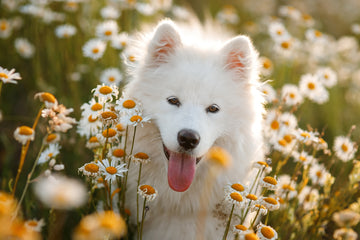
Samoyed dogs are known for their white, fluffy double coats that once kept them warm during the harsh Siberian winters. Their eyes appear dark black or brown, but some can have lighter or blue eyes depending on breeding. Samoyeds have triangular ears that stand up and a curled, fluffy tail.
Additionally, these dogs have naturally turned-up mouths that make it look like they're smiling. Females are smaller than males and often considered medium-sized dogs, while males may be considered large, so it's worth considering how big you want your dog to be and choose based on sex.
Behavioral Characteristics Of Samoyeds
Samoyeds are friendly, intelligent dogs that are often gentle with small children. However, they can be territorial and protective of their families.3 A working breed, these dogs are not happy lying around the house or spending time alone; they thrive on affection and attention from their pet parents.2
Overall temperament and personality of your Samoyed depend on various factors like upbringing and past experiences, so training will be important with any type of breed. However, as working dogs, Samoyeds are generally high-energy and prefer having a job, so they may prefer agility training and require comprehensive obedience training to prevent them from chasing after squirrels in the yard. These dogs were originally bred for hunting, so they may perceive smaller animals as prey and try to chase them, so it's crucial to invest in training and socializing your Samoyed puppy as soon as possible.
Samoyeds are typically relatively easy to train because they're eager to please, but because they're a working breed, they can sometimes be willful.2 Additionally, they have a high energy level and will require mental and physical stimulation throughout the day to prevent undesirable behaviors that stem from boredom.
Samoyeds will be your best friend if you want a talking dog because they're very vocal and do more than simply bark to alert.2 Instead, they bark to talk to you; they'll let you know if they have something to say. Samoyeds are similar to Huskies in this respect, known to howl and yodel.
Caring For A Samoyed
Samoyeds have a thick double coat that once protected them from the harsh conditions of Siberia. However, they've adapted to warmer climates and can tolerate living in most US states.1 Caring for a Samoyed is relatively easy since they're often easy to train, but since they're high-energy working dogs, they need a pet parent who can prioritize training. Additionally, they have high-maintenance coats that require frequent grooming, so they may not be ideal for some pet parents.
Grooming
Samoyeds are considered one of the most hypoallergenic dog breeds. However, no dog breed is truly hypoallergenic because they shed and have dander. Samoyeds have a thick, fluffy double coat that helps protect them in the cold winter. They don't shed as much as other dogs, but you can expect to find their white hair on the carpet, furniture, and clothing. Because they have longer coats, they should have their fur brushed daily to remove loose hair and prevent mats and tangles.
Like other dogs, your Samoyed will also need their teeth brushed and nails trimmed regularly. You should aim to brush your dog's teeth daily to prevent serious health issues like periodontal disease. Additionally, how often you trim your dog's nails will depend. Typically, dogs who frequently walk on hard pavement like sidewalks don't need their nails trimmed as often as dogs who run in the grass and walk on the carpet. Generally, you should never hear your dog's nails clicking on hardwood floors or pavement.
Exercise
Samoyeds are fairly high-energy dogs, so they need regular exercise every day to keep them happy. Remember, they're a working breed, so they're happiest having a job.2 However, spending quality time with you is most important to your Samoyed. These are companion breeds, so they want to play with you instead of running around alone in the backyard. Since this breed is a natural hunter with a strong prey drive, they benefit from having a fenced-in yard to prevent them from roaming.2
In addition to physical exercise, your Samoyed needs mental stimulation to stay happy and healthy. These dogs were bred to work, so providing them with a job can help them stay busy. Additionally, you can play brain games with them or invest in puzzle toys.
Diet
Samoyeds typically don't require a special diet. Instead, they thrive on high-quality commercial dog food appropriate for their age and health.2 Since they're an active breed, as long as you ensure they get enough exercise, Samoyeds should maintain a healthy weight. However, if your Samoyed has gotten a little lazy, feeding them too many treats can cause weight gain and obesity.
Training
Samoyeds are companion pets that are easy to train because they originally lived closely with ancient people in northern Russia, where temperatures can reach -50°F or colder. Since they often provided their human companions with warmth, they forged an unbreakable bond with humans.2 Because of this, they require training and, without it, can start to exhibit undesirable behaviors.
Providing your Samoyed with companionship is crucial. They don't want to play alone, and when they spend too much time alone, they can become destructive.

Health Of A Samoyed
Samoyeds are generally healthy and happy dogs that enjoy spending time with their human companions. A well-taken care of Samoyed has a lifespan of over ten years. However, they're prone to a few health conditions. For example, Samoyeds are prone to adverse reactions from sulfa and medications that contain sulfa.1 Other potential health concerns for Samoyeds include the following:
- Eye disorders: Samoyeds may suffer from various eye diseases, including glaucoma, cataracts, retinal dysplasia, and progressive retinal atrophy. The two retinal diseases are genetic diseases that can cause blindness, but there's DNA testing available for the parents and puppies to safeguard against them.4
- Hip Dysplasia: Hip dysplasia is a medical condition that affects the development of the hip joint and is most common in large breeds.4 With hip dysplasia, the hip joint continues deteriorating, potentially causing limping, pain, and stiffness.
- Samoyed Hereditary Glomerulopathy: Samoyed Hereditary Glomerulopathy (SHG) is a genetic kidney disease common in this breed and causes the kidneys to malfunction by damaging the glomerulus — the kidneys' filtration system.4 Ultimately, it causes the body to stop filtering toxins in the dog's blood, which can eventually lead to kidney failure.
- Diabetes: Samoyeds are at an increased risk of developing diabetes, suggesting their genetics might play a role.5 However, further research is needed to determine why this breed is at an increased risk.
FAQs
Are Samoyed dogs expensive?
It's highly unlikely to find a Samoyed puppy at an animal shelter because they're a friendly, beautiful breed that loves spending time with its human companions. Therefore, you'll likely have to purchase your Samoyed puppy from a reputable breeder, with costs ranging from a few hundred to thousands of dollars. If your Samoyed is bred from an award-winning bloodline, they'll cost even more.
Can a Samoyed live in hot weather?
Yes. Samoyeds can live happy, healthy lives in warm climates. However, they don't thrive as well in hot climates as in colder climates. So while these dogs can be happy in places like Florida, they prefer living in areas with cold winters.
That said, your Samoyed must live inside. While they can spend lots of time playing in the yard, they should sleep inside with air conditioning because leaving them outside in hot weather can be dangerous for them.
Are Samoyeds friendly?
Samoyeds are often one of the friendliest breeds because they were bred to be working and companion animals to their Samoyedic families. Living in close proximity to humans for so long made these dogs friendly, loving, and loyal. However, they may also be prone to issues like separation anxiety because they're happiest when they spend time with their human companions.

Final Notes
Samoyeds are beautiful, smart, friendly, and energetic smiling dogs that make a great addition to most households. While they're generally healthy, they're prone to several health conditions.
At Dutch, we treat a variety of dog breeds and conditions to ensure the health and wellness of your pet. Try our telemedicine for pets services today to diagnose and treat your Samoyed.
Share
References
-
"Breed Origin and History." Samoyed Club of America, 31 Mar. 2015, https://www.samoyedclubofamerica.org/the-samoyed/in-depth/breed-origin-and-history/.
-
Wójcik, Anna, and Kinga Powierża. "The influence of breed, sex, origin and housing conditions on undesirable behaviors in ancient dog breeds." Animals 11.5 (2021): 1435.
-
Hypoallergenic and Low Shedding Dogs. https://atdpsites.berkeley.edu/lchiang/samoyed.html.
-
“Samoyed.” PetMD, https://www.petmd.com/dog/breeds/samoyed.
-
“Samoyed - Diabetes Mellitus.” UFAW, https://www.ufaw.org.uk/dogs/-samoyed---diabetes-mellitus.


